

How to Set Your Thermostat to Save Energy Year-Round
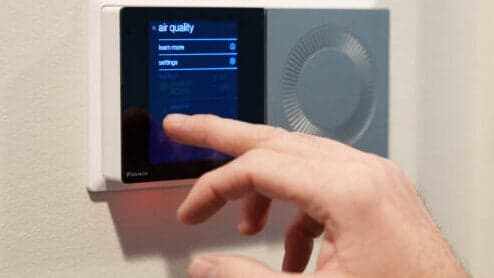
If you're like most homeowners in Phoenix, you rely heavily on your HVAC system to maintain the indoor climate in your home. However, like any other appliance, running this system is expensive because it can use up a lot of energy. That's why it's important to understand best practices on how to efficiently run an HVAC system so you're not driving up utility costs with excessive energy use.
As a homeowner, you have the power to run a more efficient system, and it all starts with your thermostat. Check out the four key thermostat features we recommend implementing in your home, plus two bonus moves you can make outside of your thermostat that may help as well.
Establish a Setpoint
A setpoint is the temperature you set on your thermostat. The number you decide to heat or cool your home to dictates how hard your system will have to work.
The optimal thermostat setting is to establish a setpoint when you're home and a setpoint when you're away or asleep. The U.S. Department of Energy's guidance is to set your thermostat back 7°F to 10°F from its normal setting for about 8 hours a day.
Changing With the Seasons
For example, in the summer, if you keep your thermostat at 75°F, turning it up to 80°F to 85°F while you're at work could save you money.
During the winter, if you keep your thermostat at 68°F, turning it down to between 60°F and 65°F while you sleep or are away could save you money. One caution for Phoenix: most homes here heat with a heat pump, and a large setback can trigger the auxiliary heat strips when the system catches back up, which costs more to run than the setback saves. Heat pump homes do better with smaller winter setbacks.
Essentially, the smaller the difference between the indoor temperature and the outdoor temperature, the less your HVAC system has to work. The less your HVAC system has to work, the lower your overall cooling and heating expenses will be.
Be Mindful of Straining Your System
It's important to note that simply turning your HVAC system on and off instead of using a setpoint method puts a lot of strain on your system, which can result in costly repairs and spikes in cooling costs.
Think of it like this: Your car will burn through more gas if you slam on your brakes and then hit the gas pedal instead of gradually slowing down and then speeding back up. Turning your HVAC on and off will burn more energy than simply changing the temperature.
The key takeaway is to have a setpoint schedule. A programmable or smart thermostat will help get the job done more effectively. If your home doesn't have one, make sure you manually remember to change the setpoint based on your schedule.
Get a Programmable or Smart Thermostat
One of the most efficient ways to control the temperature in your home is through a programmable or smart thermostat. You can program your thermostat to operate and cool/heat your home during the hours that you know you'll be active within it, asleep, or not present. These types of thermostats take the stress of remembering to alter your home temperatures off your shoulders by allowing you to schedule your preferred temperatures in advance.
More specifically, smart thermostats take it to the next level as they are high-tech devices that offer a wide range of benefits. These devices learn your daily routine and automatically adjust your schedule. This way, you'll only use your heater or AC unit when you need it. You won't need to lift a finger because your smart thermostat does all the heavy lifting.
Check Thermostat Placement in Your Home
It may not seem obvious, but the location of your thermostat is critical when making sure your entire heating and cooling system operates efficiently.
A thermostat measures air temperature and responds accordingly to change it. If it's in an area that is regularly exposed to direct sunlight, mounted on an exterior wall, or tucked away from the main living areas where airflow and temperature changes naturally occur, you might receive inaccurate readings. When your thermostat cannot accurately measure air temperature, it will use your entire system inefficiently and cost you more money in unnecessary heating and cooling expenses.
An HVAC technician can review your thermostat's current location and tell you if it needs relocation to help you save money.
Thermostat set to ON vs. AUTO
These two settings tell your cooling/heating system how to use the blower. The blower is the part of your system's inside unit (usually in your attic) that circulates cooled/heated air in your home.
When set to "ON," the blower works continuously around the clock, meaning it circulates air even when your system is not actively heating or cooling.
When set to "AUTO," the blower runs only (or "automatically") when you need to cool or heat air. As soon as your thermostat reaches the desired temperature, the blower turns off alongside the rest of your heating/cooling system.
By keeping your system on "AUTO," you alleviate continuous use. When your thermostat stays in the "ON" position, it expedites wear on the blower, shortening its lifespan and increasing the chances it will break down and need repairing.
Schedule a Routine HVAC Tune-Up
Like any other appliance, your heating and cooling system needs routine tune-ups to work at its best. Be sure to schedule tune-ups regularly, for example through George Brazil's Worry-Free program. For most heating and AC units, it is recommended to schedule maintenance at least twice a year: once in the springtime for your AC and once in the fall for your heating system.
Regular professional maintenance is crucial to detecting issues early on before they become more serious. By inspecting your unit and addressing problem areas, an HVAC technician will also boost the overall efficiency of your heating and cooling system. A more efficient unit requires less energy to operate, which can save money on energy costs.
Utilize Zone Control Systems
A zone control system gives each room in your home its own thermostat that connects to a central control panel. This system allows you to control the temperature by room. When you set the thermostat to a specific temperature in one room, the central panel signals motorized dampers inside your ductwork to open or close, directing conditioned air exactly where it is needed. By adjusting the temperature on each thermostat, you can control the temperature of every zone in your house, allowing you to optimize your indoor comfort and efficiency.
Because you're only running your HVAC system in the rooms you use most, you save considerable energy with zone control systems. These systems also allow you to personalize your home's temperature according to you and your family's preferences, creating more convenience and comfort.
Schedule a service visit with a licensed HVAC technician if you're interested in having a zone control system in your home.
Your Team for Expert AC and Heating Repair is George Brazil
For about 70 years, George Brazil has provided heating and cooling services throughout Phoenix, AZ, and the surrounding areas. From repairs and replacements to routine maintenance, our licensed team of HVAC experts is trained and equipped to deliver the heating and cooling services you need year-round. That includes ensuring homeowners have the best thermostat system setup in their home to improve daily efficiency and lower monthly energy bills along the way. Schedule your next HVAC service with George Brazil today!