
Air conditioning is essential equipment in Arizona. With temperatures regularly climbing past 100 degrees for weeks at a time, a working AC system keeps a home safe, not just comfortable. From late spring through early fall, an AC unit runs almost nonstop, and that heavy use adds up over the system’s lifetime.
Because of Arizona’s extreme desert heat, central air systems here work far harder than the average unit anywhere else in the country. In milder climates, an AC system might cycle on and off a handful of times a day. In Phoenix, that same system can run almost continuously for months at a time. All that operation puts real strain on the compressor, condenser, and every other component in the system.
Most of the problems that shorten a system’s life are preventable. With the right habits, a system can run more efficiently, avoid expensive emergency repairs, and deliver more years of reliable performance, all while keeping energy bills in check.
As your local Phoenix HVAC experts, George Brazil helps Valley homeowners get more life out of their heating and cooling equipment. Below are eight steps our technicians recommend, covering routine care, everyday habits, and a few less obvious factors that determine how long a system lasts.
1. Schedule Routine HVAC Maintenance Visits
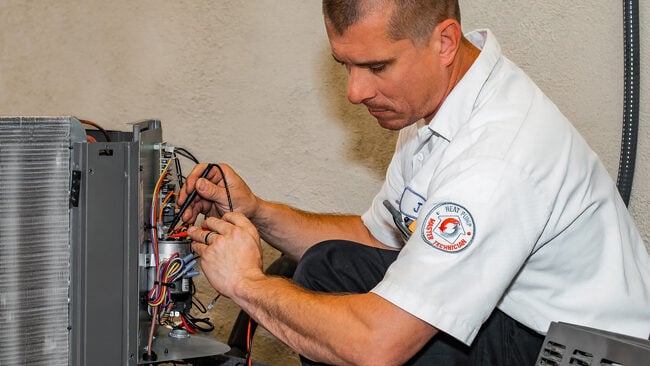
Routine AC maintenance is a small, recurring investment that prevents much bigger problems later. During a professional maintenance visit, a licensed HVAC technician inspects refrigerant levels, checks electrical connections, cleans coils, tests system pressure, and catches small issues, such as a worn belt or a failing capacitor, before they turn into a full system breakdown on the hottest day of the year.
Regular tune-ups don’t just prevent breakdowns. They also help a system run at peak efficiency, which can lower monthly energy bills all summer long. A neglected system has to work harder to produce the same amount of cool air, and that extra strain adds up in both wear and on the utility bill.
The same logic applies to repairs. An HVAC system is a network of connected parts, so a small problem in one component, such as a failing capacitor or a low refrigerant charge, forces the rest of the system to work harder to compensate. Addressing a repair as soon as it’s identified, rather than waiting, keeps that strain from spreading to other components.
That’s why we offer HVAC maintenance memberships that include two annual visits: one before the summer heat ramps up, and one mid-season check-in. It’s an affordable way for Phoenix homeowners to stay ahead of costly repairs and keep their system covered year-round. Staying current on scheduled maintenance also protects the manufacturer’s warranty on major components, since many warranties require documented service records to stay valid.
2. Change Your Air Filters Regularly
Changing your air filter is one of the simplest maintenance tasks there is, and one of the most commonly overlooked. A dirty, clogged filter forces your HVAC system to work harder to push air through your home. That drives up your energy bills, reduces indoor air quality, and wears out components faster than they should.
Dusty desert conditions and heavy AC usage mean filters get dirty faster here than in other parts of the country. If you’re unsure how often to change your air filter, check it monthly during peak summer use and replace it as needed. A clean filter keeps air flowing freely, helps your system cool your home more evenly, and can help reduce allergens and dust circulating through your vents.
3. Keep Your Outdoor Unit Clean and Clear
Your outdoor condenser unit releases the heat your system pulls out of your home, and it needs good airflow to do that efficiently. Dirt, leaves, dust, and yard debris can build up around and inside the unit, blocking airflow and forcing your system to work overtime just to keep up.
Clear away debris regularly and keep at least two feet of open space around the unit, away from bushes, fences, or storage items. A quick rinse with a garden hose, with the power off, can help keep dirty condenser coils free of dust and grime, which builds up quickly in a dry, dusty climate.
4. Check Your Condensate Drain Line
While an AC system runs, it pulls moisture out of the indoor air and carries it outside through the condensate drain line. Leaves, dust, and algae growth can clog that line over time. When it clogs, water backs up into the indoor unit instead of draining outside, which can damage the system and, in some cases, the surrounding drywall or flooring.
Check the drain line for standing water or a slow drip during the cooling season. A shop vacuum can usually clear a minor clog at the outdoor end of the line. A backup that keeps recurring is usually a sign of a deeper clog or a line that wasn’t sloped correctly during installation, and it’s worth having a technician look at it before it causes water damage.
5. Keep Every Vent Open
Closing vents in unused rooms is a common way homeowners try to cut cooling costs, but it works against the system rather than for it. Closing too many vents increases air pressure inside the ductwork, which forces the blower motor to work harder to push air through the vents that remain open.
Keep every supply and return vent open, even in rooms that are rarely used. Our technicians explain why closing air vents can damage an HVAC system in more detail, but the short version is that the system is built to move a set volume of air, and blocking part of that path strains the rest.
6. Set Your Thermostat Correctly
Setting the thermostat far below the temperature you actually want doesn’t cool a home any faster. It only makes the system run longer than necessary, which increases energy use and adds wear to the compressor. As a general rule, avoid setting the thermostat more than 20 degrees below the outdoor temperature.

7. Seal Ducts and Check Your Insulation
Ductwork with leaks, holes, or loose connections can lose a significant share of the conditioned air a system produces before it ever reaches a vent. That lost air means the system has to run longer to reach the temperature on the thermostat, which increases both energy costs and wear on the equipment. Sealing your ducts closes that gap.
Poor home insulation creates a similar problem from a different direction. When conditioned air escapes through walls, attics, and gaps around doors and windows, the system has to run longer to make up for the loss. Improving a home’s insulation reduces that loss and takes pressure off the HVAC system, which extends its working life.
8. Make Sure Your System Is the Right Size
An AC system that’s too large for a home cools it too quickly, which causes the system to cycle on and off more often than it should. An AC system that’s too small can’t keep up on the hottest days, so it runs nearly nonstop trying to reach the set temperature. Both patterns increase wear and shorten the system’s life.
The right size for a home is determined by a load calculation, a technician’s assessment of a home’s square footage, insulation, window placement, and other factors that affect how much heat the system needs to remove. If you’re unsure whether your current system is the right size for your home, a load calculation is the way to check.
Why HVAC Maintenance Matters More in Phoenix
Homeowners in milder climates can sometimes skip a maintenance visit without much risk. In Phoenix, that’s a much riskier bet. Local systems run longer hours, face higher outdoor temperatures, and handle more strain than systems almost anywhere else in the country. That combination means small issues escalate faster. A breakdown in July or August is more than an inconvenience. It can pose a genuine safety concern for young kids, older adults, and pets.
That extra strain shows up in the numbers. The average air conditioner lasts 15 to 20 years nationally, according to the U.S. Department of Energy. In Arizona, that average tends to run shorter, closer to 10 to 14 years, because local systems operate so much more than systems in milder climates. The steps above won’t make a system last forever, but they close much of that gap.
Staying proactive with maintenance and the habits above is one of the most effective ways Phoenix homeowners can protect their comfort, their budget, and their equipment investment at the same time.
Protect Your System for the Long Run
Scheduling routine maintenance, changing filters, keeping vents open, and paying attention to the details above will help a system run efficiently and last closer to its full expected lifespan, even in one of the hottest states in the country. Consistent care goes a long way toward avoiding an unexpected breakdown when you need your AC the most.
If you need to schedule maintenance, want a seasonal tune-up, are due for an AC repair, or are ready to talk about AC installation, reach out to your local HVAC pros at George Brazil. We’re proud to help Phoenix area homeowners stay cool, comfortable, and worry free all season long.